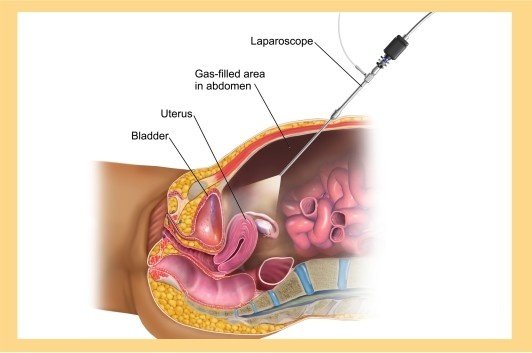
DIAGNOSTIC LAPAROSCOPY
Diagnostic laparoscopy is a minimally invasive surgical procedure used to examine the abdominal and pelvic organs.
- Purpose:Diagnostic laparoscopy is performed to visually inspect the abdominal and pelvic organs, such as the uterus, fallopian tubes, ovaries, bladder, and intestines, to diagnose conditions such as endometriosis, pelvic inflammatory disease (PID), ovarian cysts, adhesions, and infertility issues.
- Procedure Overview: During a diagnostic laparoscopy, the patient is placed under general anesthesia. Small incisions (usually 0.5 to 1 centimeter) are made in the abdomen, through which a laparoscope (a thin, lighted tube with a camera) and other surgical instruments are inserted.
- Visualization of Organs : The laparoscope provides a magnified view of the abdominal and pelvic organs, allowing the surgeon to inspect them for any abnormalities, lesions, adhesions, or signs of inflammation.
- Biopsy or Sampling: If abnormalities are detected during the laparoscopy, the surgeon may take tissue samples (biopsies) for further examination in a laboratory. This helps confirm diagnoses and guide treatment plans.
- Treatment: In some cases, diagnostic laparoscopy may transition into a therapeutic procedure if abnormalities are identified and can be addressed surgically during the same operation. For example, adhesions or ovarian cysts may be removed, or tubal blockages may be corrected.
